Guides
Learn to read aviation weather.
Practical guides for pilots: METAR and TAF, weather products, wind, flight rules, night flying, flight planning and the instrument rating.
Weather reports
METAR, SPECI and TAF, group by group: codes, remarks, ceilings and flight categories.
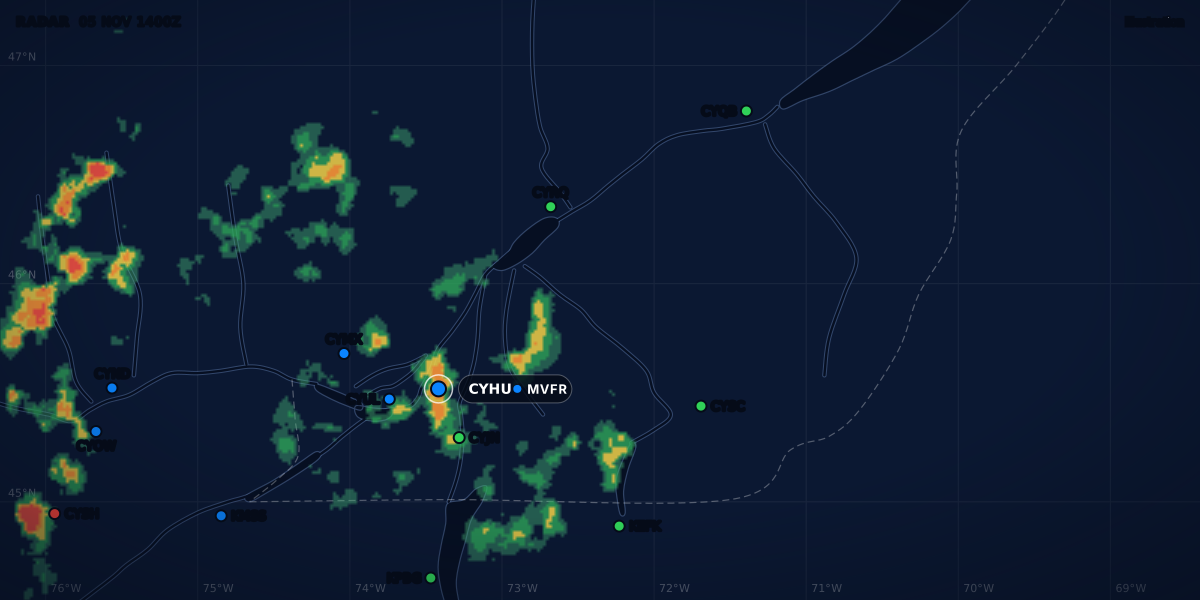
How to read a METAR, group by group
Read any METAR in a minute: wind, visibility, weather, clouds, ceiling, temperature and altimeter, with a real Canadian report decoded group by group.
 By Jp Valery6 min read
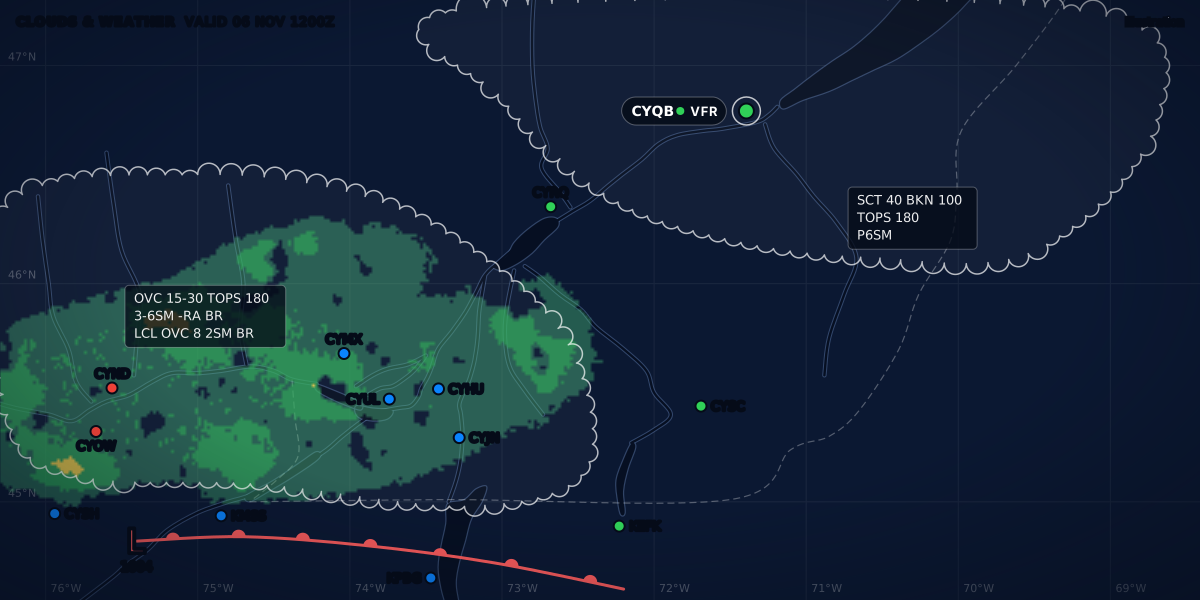
How to read a TAF: a full decode, group by group
Decode any TAF group by group: validity, wind, wind shear, visibility, weather and cloud, with a real-format Canadian TAF and the US and French differences.
By Jp Valery17 min read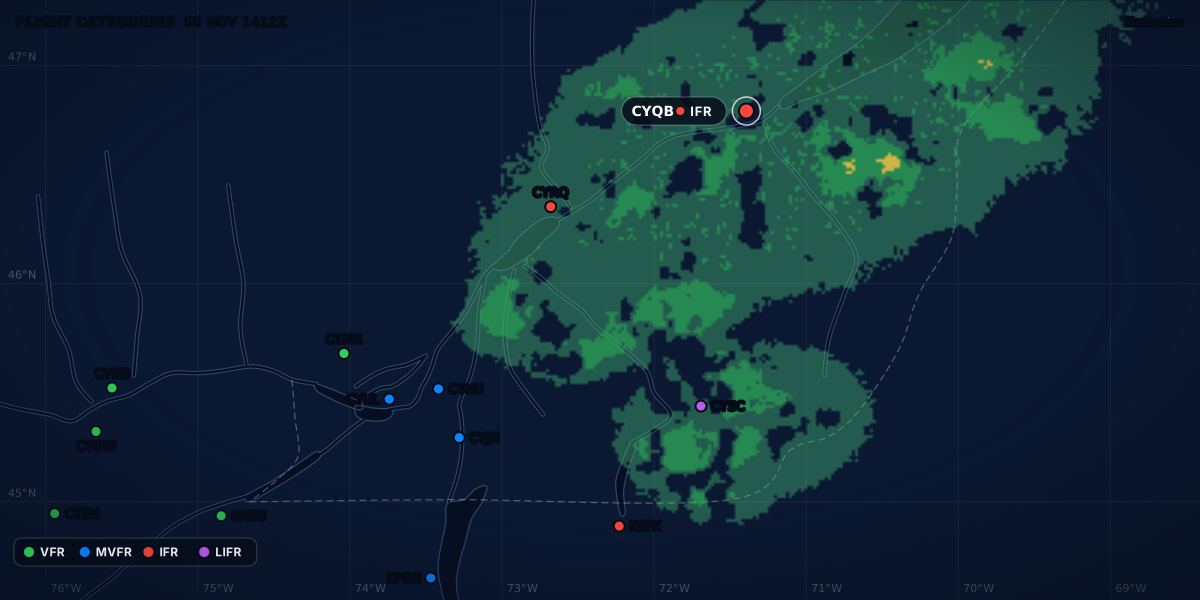
VFR, MVFR, IFR and LIFR: flight categories explained
What VFR, MVFR, IFR and LIFR mean in a weather report, the exact ceiling and visibility limits, how to find the category, and what it does not tell you.
By Jp Valery4 min read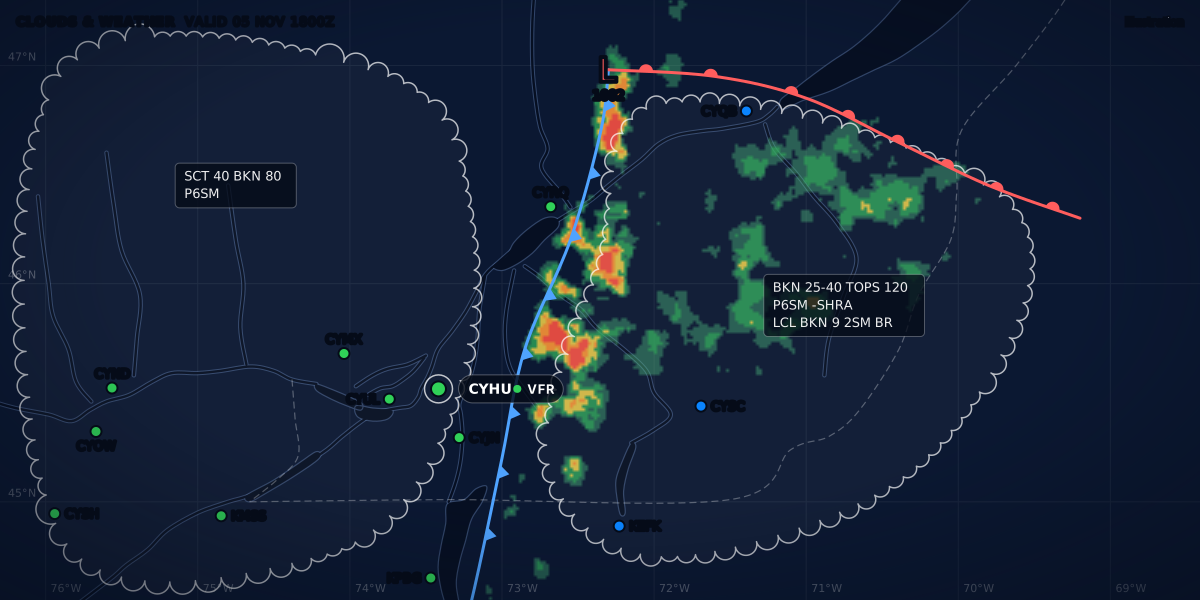
TAF change groups: FM, BECMG, TEMPO and PROB
How a TAF changes over time: FM, BECMG, TEMPO, PROB30 and PROB40 explained with a real-format Canadian TAF, and how to read them for planning.
By Jp Valery6 min read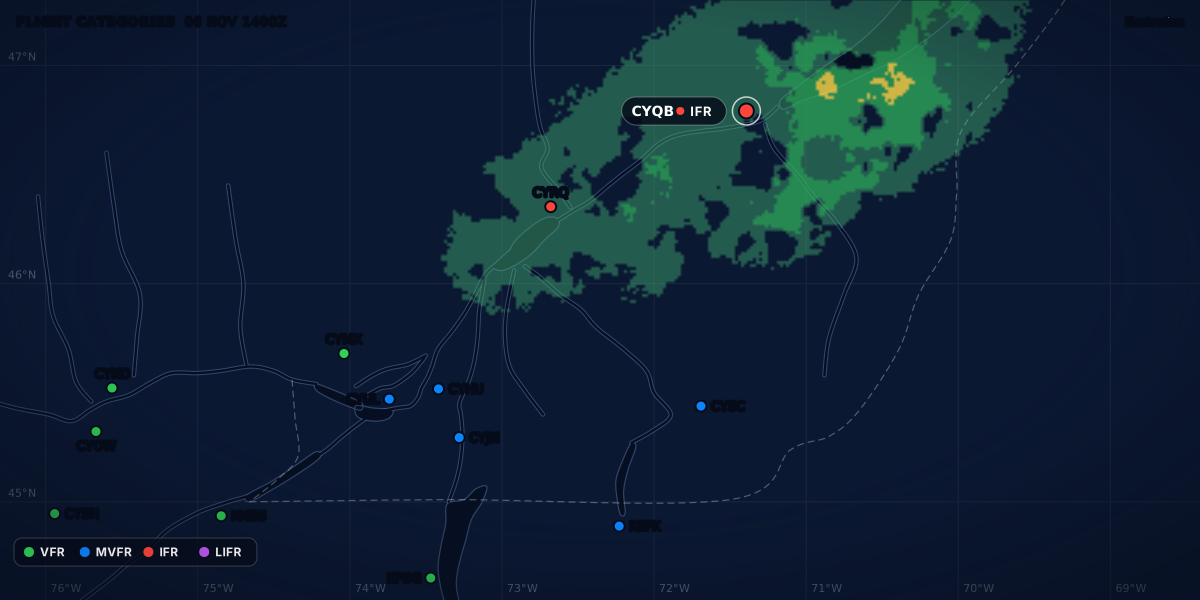
What is a ceiling in aviation? Canada, US and EU definitions
The cloud ceiling is the lowest broken or overcast layer, or a vertical visibility. Canada, US and EU definitions side by side, and the SCT, VV and CLR cases.
By Jp Valery9 min read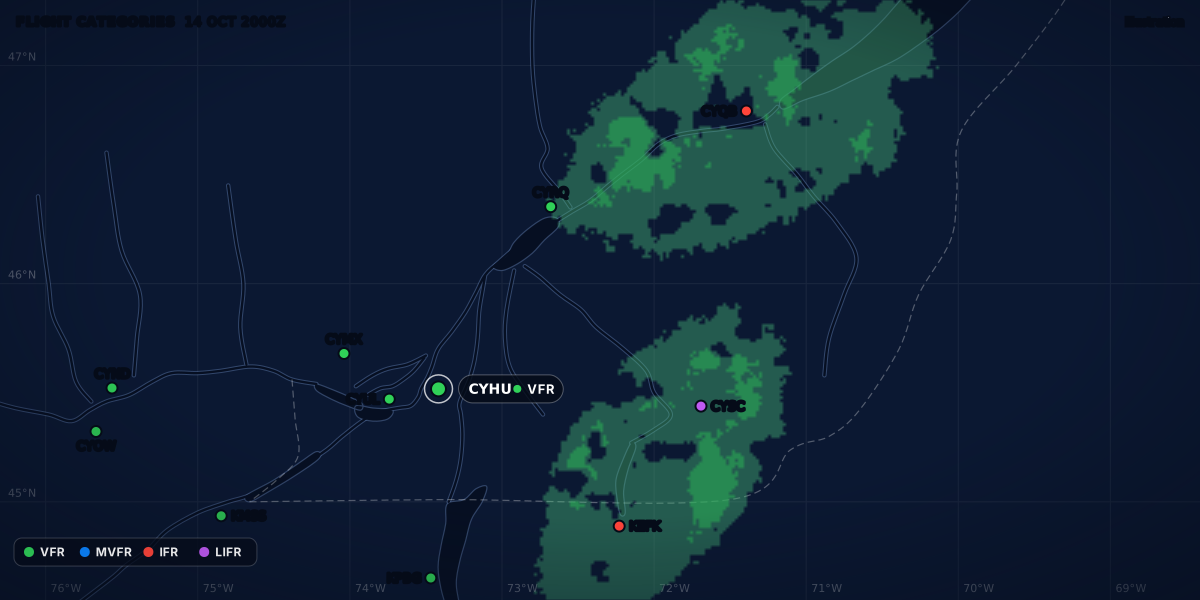
METAR remarks (RMK) decoded: US and Canadian examples
Decode the RMK section: AO2, SLP, the T group and peak wind in US reports, and cloud types such as SC6AC2 and density altitude in Canadian ones.
By Jp Valery12 min read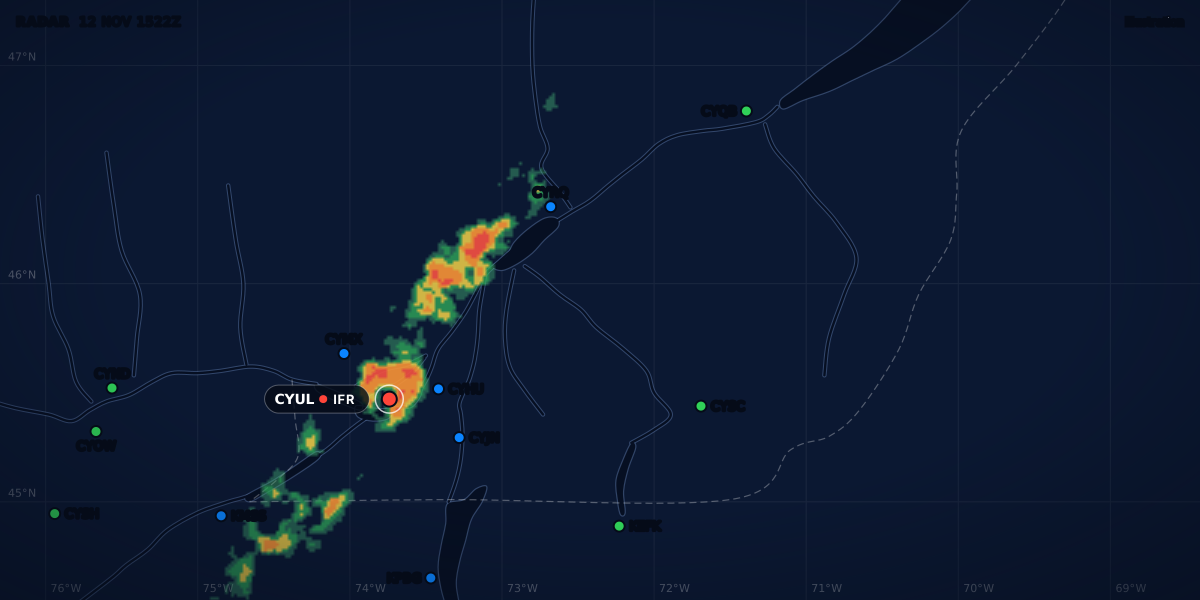
SPECI METAR: what triggers a special weather report
A SPECI is a weather report issued between the hourly METARs when the weather crosses a threshold. The Canadian and US triggers, side by side.
By Jp Valery10 min read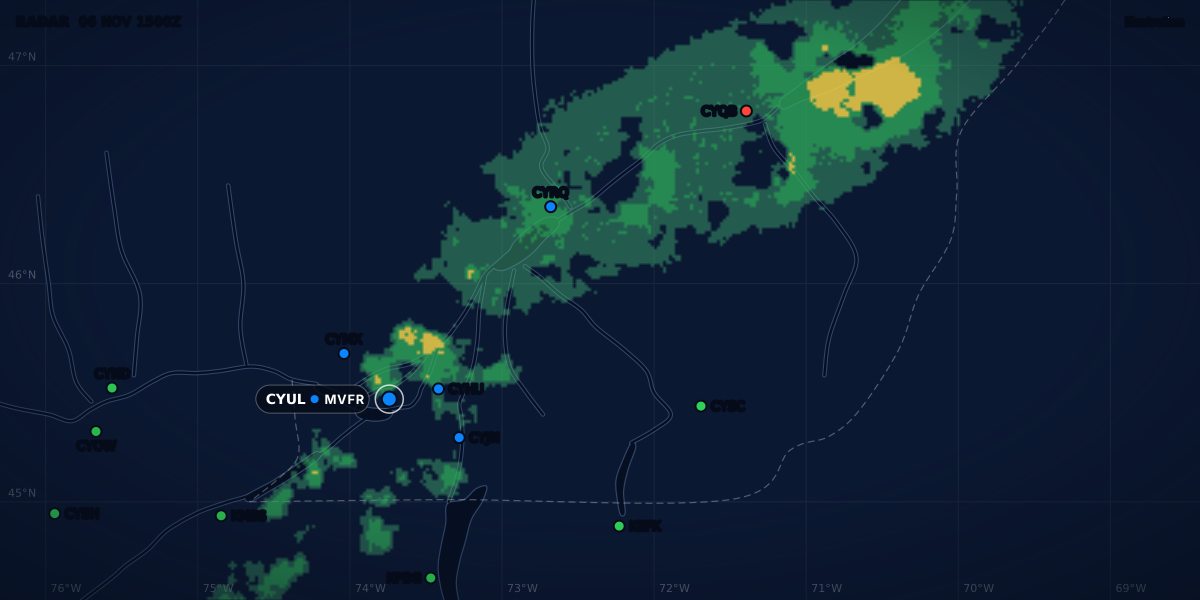
METAR weather codes and abbreviations: the full list
Every METAR weather code, plus the report-body abbreviations: RA, BR, FG, VCSH, +FC, FEW to OVC, CAVOK, AUTO, NOSIG, and where Canada, the US and ICAO differ.
By Jp Valery17 min read
Weather products
GFA, AIRMET and SIGMET, PIREPs, winds aloft, fog, altimeter settings and density altitude.
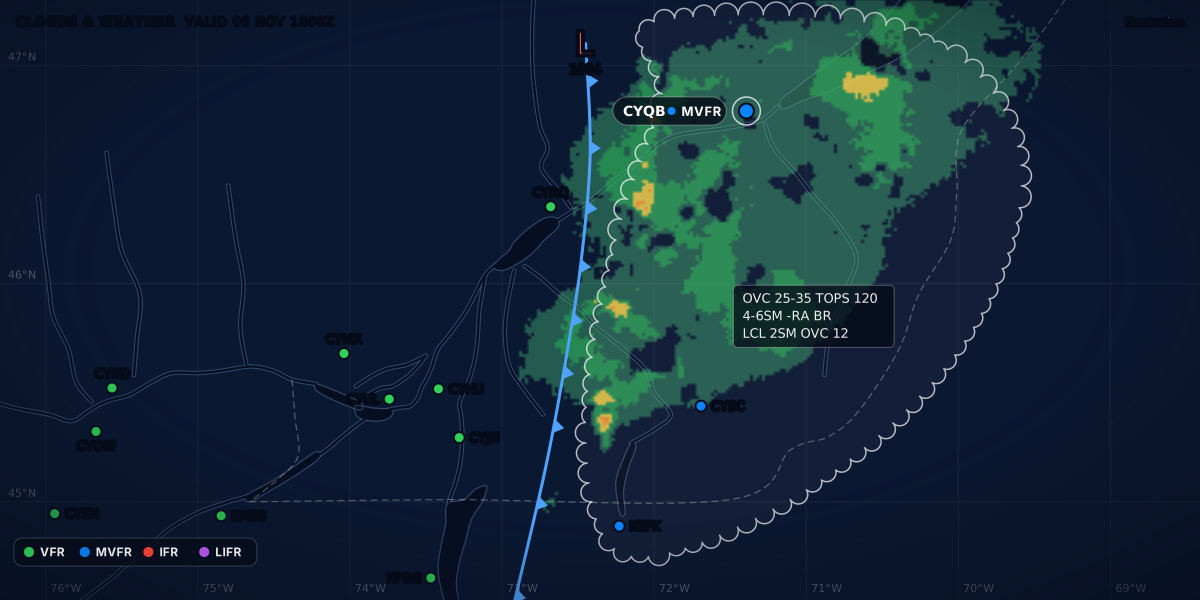
How to read aviation weather: every report, forecast and chart
METAR, TAF, GFA, SIGMET, AIRMET, PIREP and winds aloft: what each product tells you, who issues it, and where to get it in Canada, the US and France.
By Jp Valery13 min read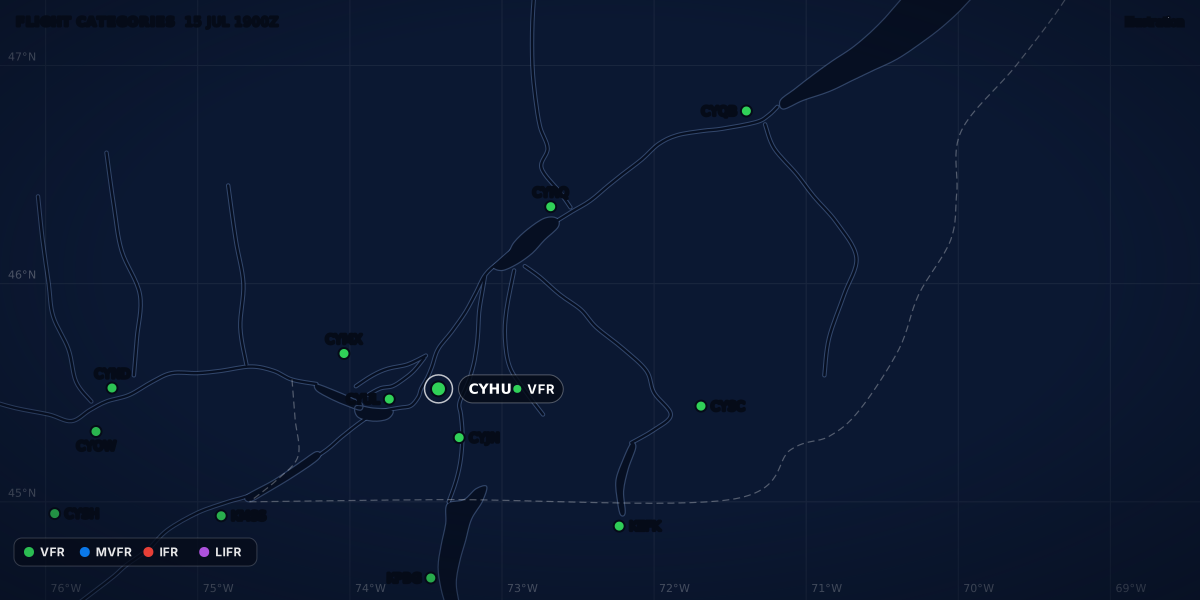
Density altitude formula, rule of thumb and a METAR example
How to compute pressure and density altitude from a METAR: the exact formula, the rule of thumb, the NWS formula with dew point, and a chart.
By Jp Valery13 min read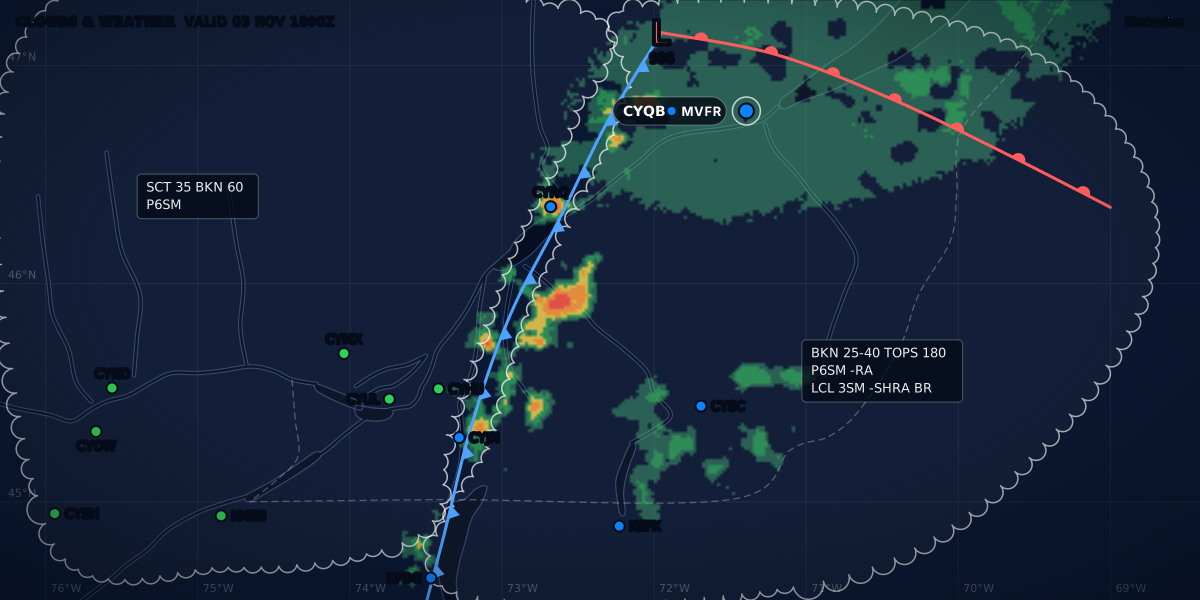
QNH, QFE and 29.92: altimeter settings in Canada, the US and Europe
QNH, QFE, A2992 and Q1013 explained, with the rules: the altimeter-setting region and 18,000 ft in Canada and the US, the transition altitude in Europe.
By Jp Valery15 min read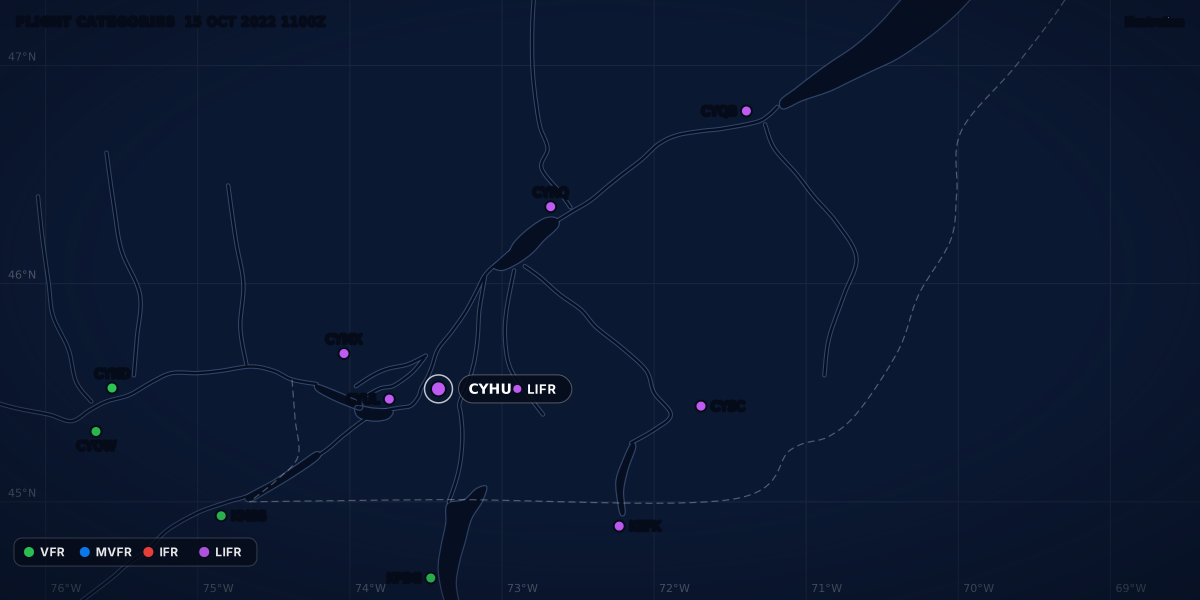
Fog types for pilots: radiation, advection and the spread rule
How radiation, advection and other fog types form, how METARs code fog in Canada, the US and Europe, and what the dew point spread really tells you.
By Jp Valery18 min read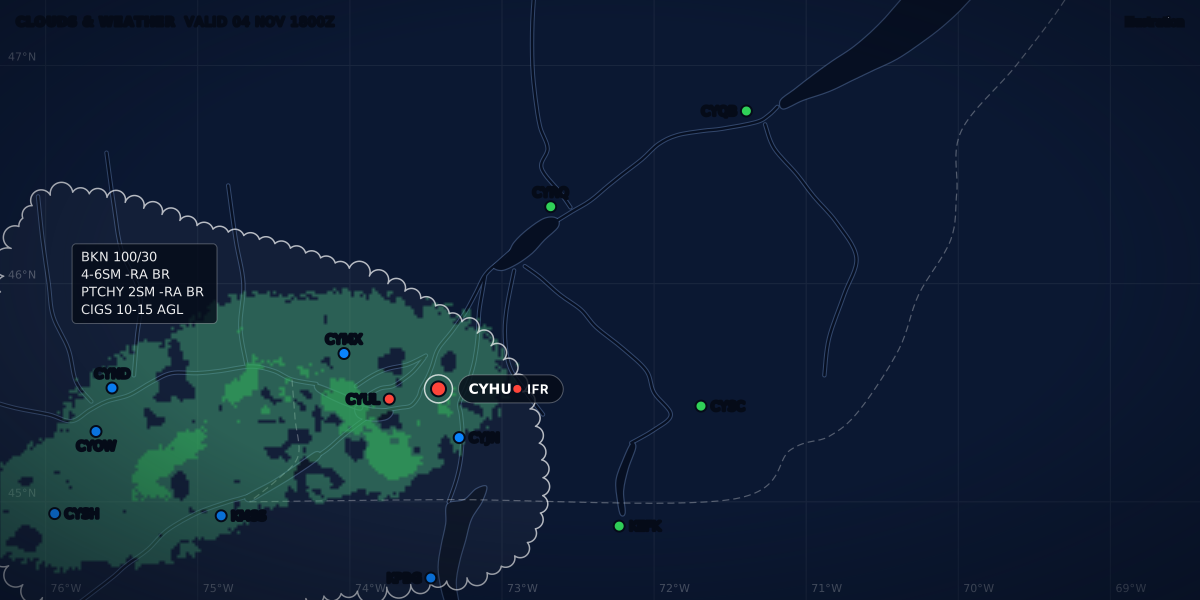
GFA: how to read NAV CANADA's Graphic Area Forecast
Read the Canadian GFA panel by panel: clouds and weather, icing, turbulence and freezing level, the IFR outlook, heights ASL, and what ISOL, OCNL and FRQ mean.
By Jp Valery15 min read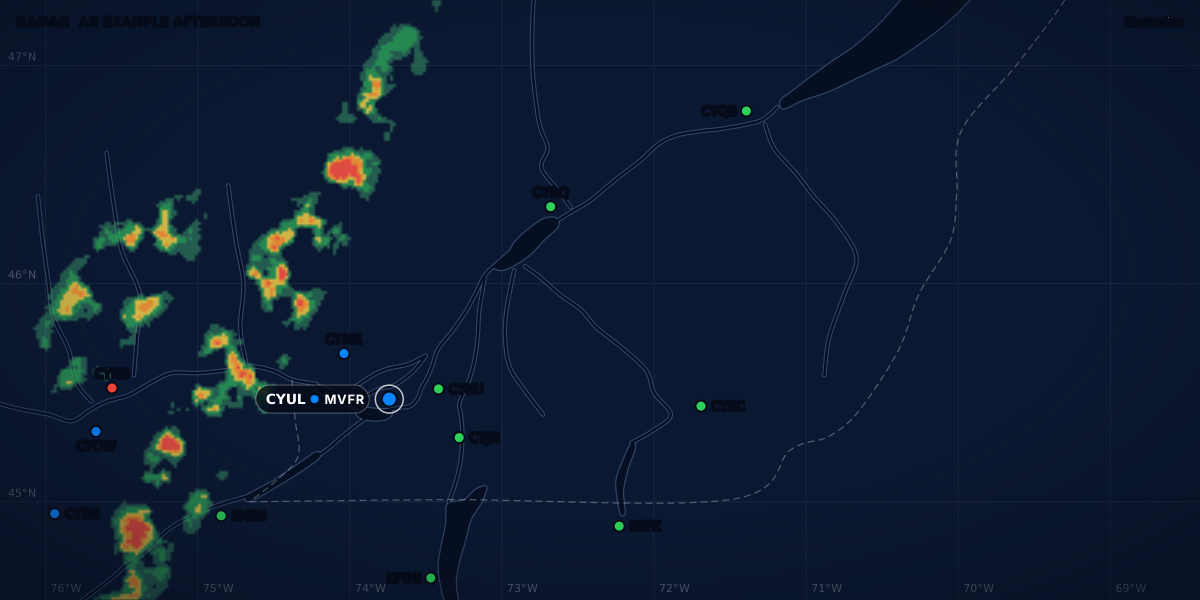
AIRMET vs SIGMET: G-AIRMETs, convective SIGMETs and Canada
AIRMET, SIGMET, G-AIRMET, convective SIGMET and CWA: what each warns about, how long it is valid (convective SIGMET: 1 hour from December 2026), and Canada.
By Jp Valery15 min read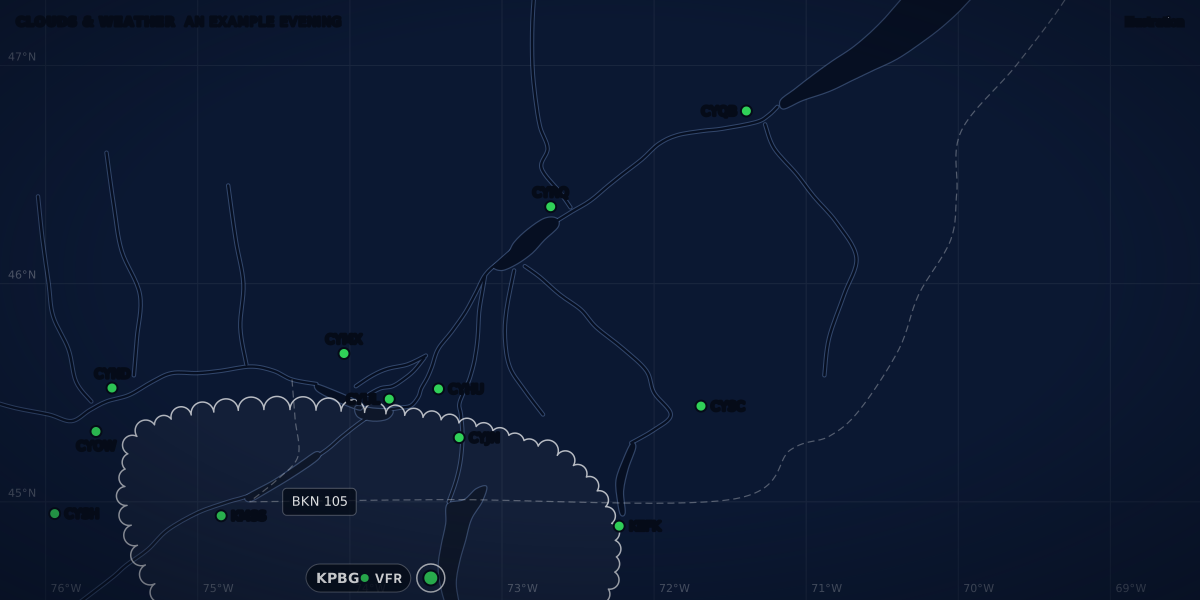
PIREP: how to read, decode and file a pilot report
Decode any PIREP field by field with US and Canadian examples, learn UA vs UUA, the turbulence and icing terms, and how to file a report in each country.
By Jp Valery16 min read
How to read winds aloft: the FB forecast, decoded
Decode a winds aloft forecast: DDff+TT, 9900, winds over 100 knots, missing temperatures, altitude references, Canada's FB, and the end of the US text tables.
By Jp Valery11 min read
Wind
Crosswind and headwind components, gusts and crosswind limits.
Crosswind component: formula, chart and the clock rule
How to work out the crosswind and headwind components: the sine formula, true or magnetic wind, a METAR example, gusts, the clock rule and a chart.
By Jp Valery11 min read
Maximum demonstrated crosswind: a limit or not?
The POH crosswind number is demonstrated, not a limit. Where it comes from, the Cessna 172 and PA-28 values, how to count gusts, the gust factor and tailwind.
By Jp Valery9 min read
Flight rules
VFR and IFR, airspace classes, VFR weather minimums, special VFR, cruising altitudes and VFR over the top.
VFR vs IFR: the types of flight rules, and VMC vs IMC
VFR and IFR are rules, VMC and IMC are conditions, MVFR is a weather category. The difference, who may fly IFR, and the other rules: special VFR, CVFR, VFR OTT.
By Jp Valery12 min read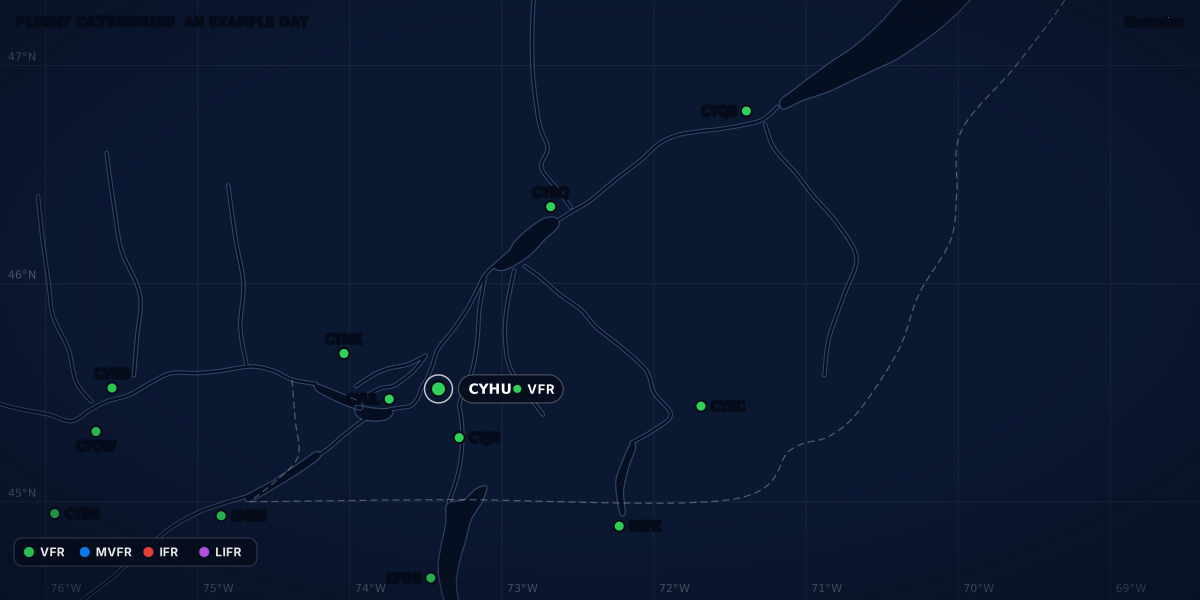
Airspace classes A to G: Canada, the US and Europe compared
Class C in Canada needs a clearance; in the US, radio contact. Classes A to G in Canada, the US and Europe: VFR entry, transponder and speed limits.
By Jp Valery19 min read
VFR weather minimums: Canada, US and Europe side by side
Legal visibility and distance from cloud for VFR in Canada (CARs 602.114 and 602.115), the US (14 CFR 91.155) and Europe (SERA.5001), with METAR examples.
By Jp Valery13 min read
Special VFR in Canada, the US and Europe: minima and night rules
Special VFR lets you fly in a control zone below VFR minima with a clearance. The minimums, how to ask, and the night rules, which differ in each country.
By Jp Valery11 min read
VFR cruising altitudes in Canada, the US and Europe
Above 3,000 ft AGL, VFR flies odd or even thousands plus 500 by magnetic track. Canada (true track in the north), the US and Europe, with worked examples.
By Jp Valery12 min read
VFR on top vs VFR over the top: US and Canadian rules
US VFR-on-top is an IFR clearance. Canada's VFR OTT needs a rating and a destination forecast check. Five similar terms, their rules, and a worked TAF check.
By Jp Valery13 min read
Night flying
When night begins for pilots, night currency and the rules for night VFR.
FAA night definition vs Canada and EASA: when night starts
When does night start for a pilot? At the end of civil twilight in Canada, the US and the EU, but the US has three nights and the UK two.
By Jp Valery13 min read
Night currency requirements for passengers: US, Canada, EASA
Before a night flight with passengers: 3 full-stop landings in 90 days (US), 5 night take-offs and landings in 6 months (Canada), 1 in 90 days (EASA).
By Jp Valery10 min read
Night VFR requirements: Canada, the US and Europe compared
What changes for VFR at night: the rating, weather minima, flight plan and minimum heights in Canada, the US and Europe, and France's own rules.
By Jp Valery13 min read
Planning
Preflight briefings, personal minimums, airfields with no weather report, and planning around wind and turbulence.
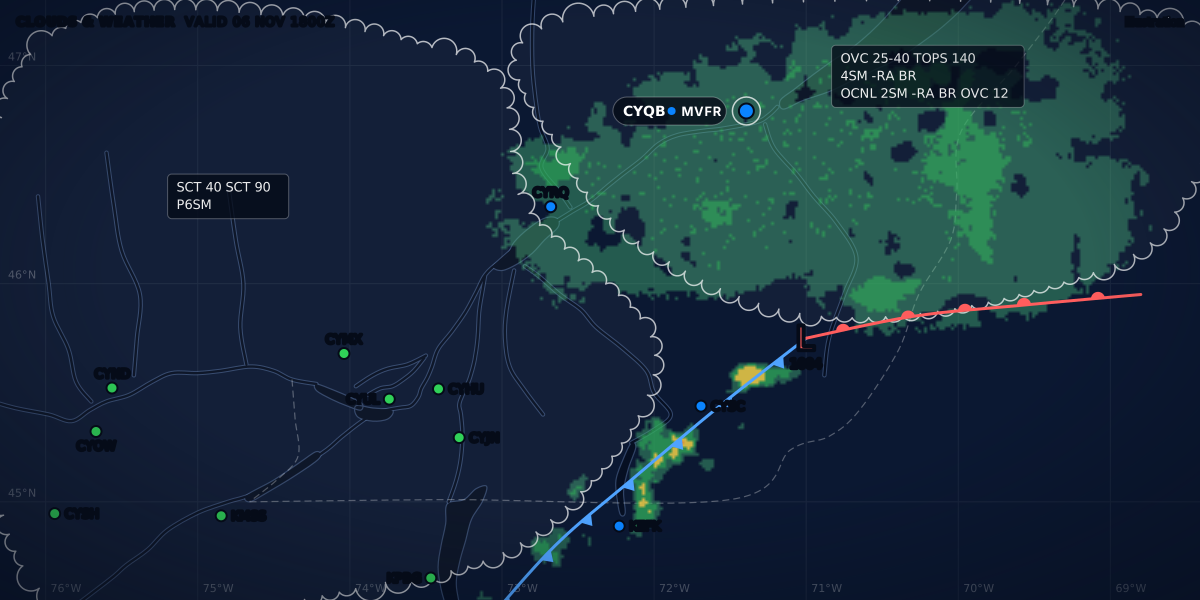
Weather briefing for pilots: how to brief, step by step
A weather briefing method that works anywhere: the legal rule, what to read in which order, where to brief in Canada, the US and France, and a checklist.
By Jp Valery14 min read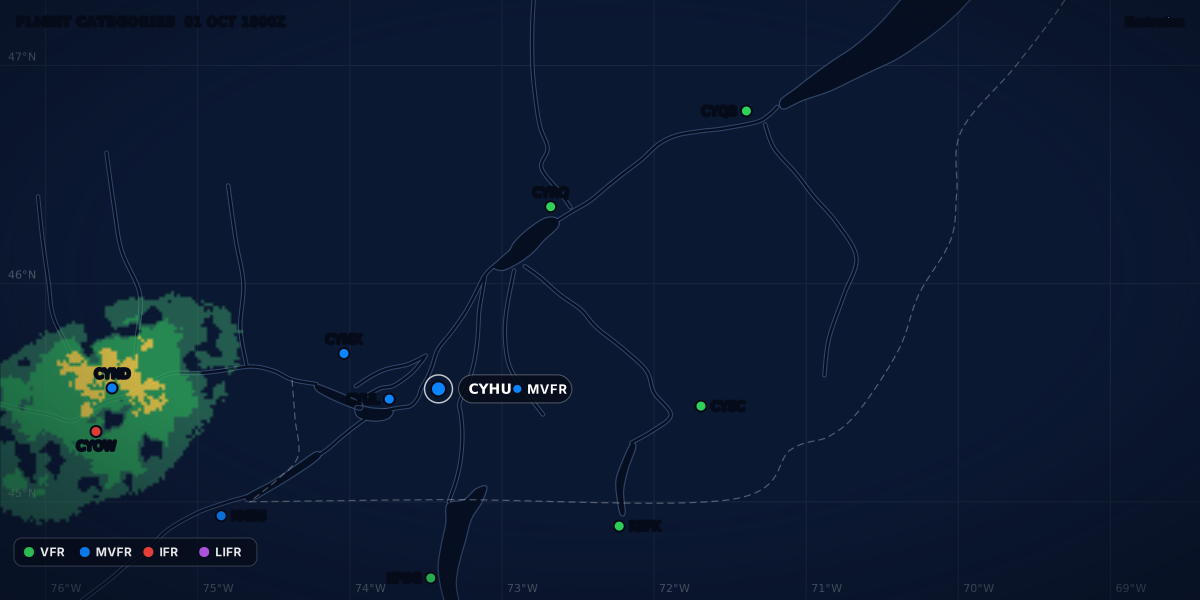
Personal minimums checklist: limits you can check in a METAR
Turn the FAA PAVE checklist into numbers you can check in a METAR or TAF: ceiling, visibility, crosswind, gusts, night and density altitude. Printable sheet.
By Jp Valery13 min read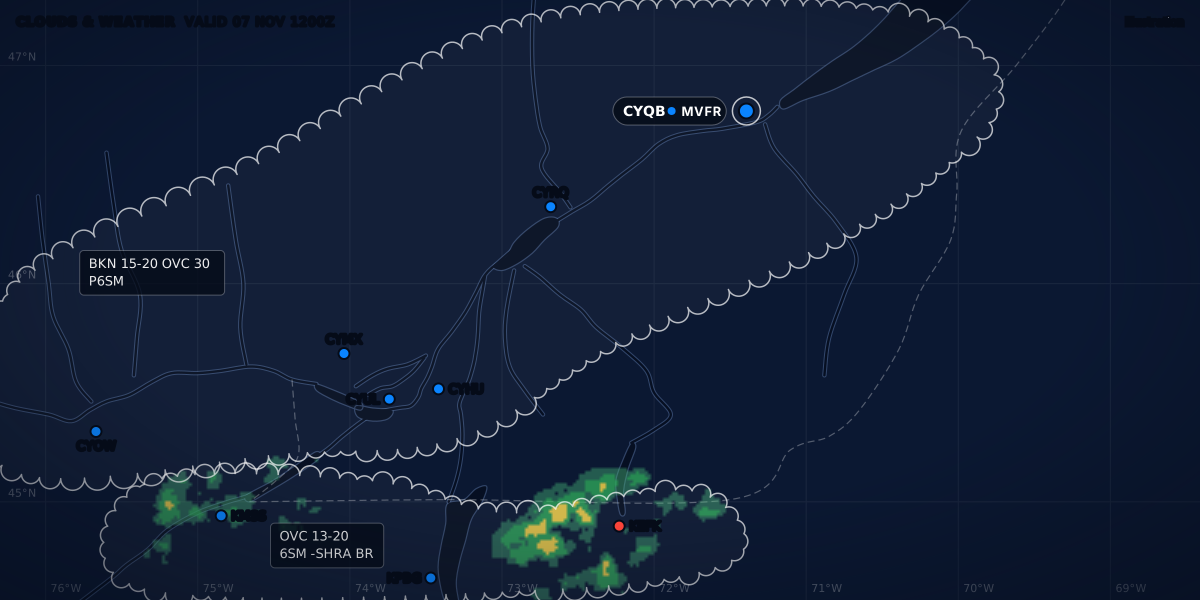
NAV CANADA weather on CFPS: how to brief now that AWWS is gone
AWWS is retired: NAV CANADA weather is on CFPS. What to open, in which order, how to call a FIC at 1-866-WXBRIEF, and a worked CYHU to CYQB briefing.
By Jp Valery15 min read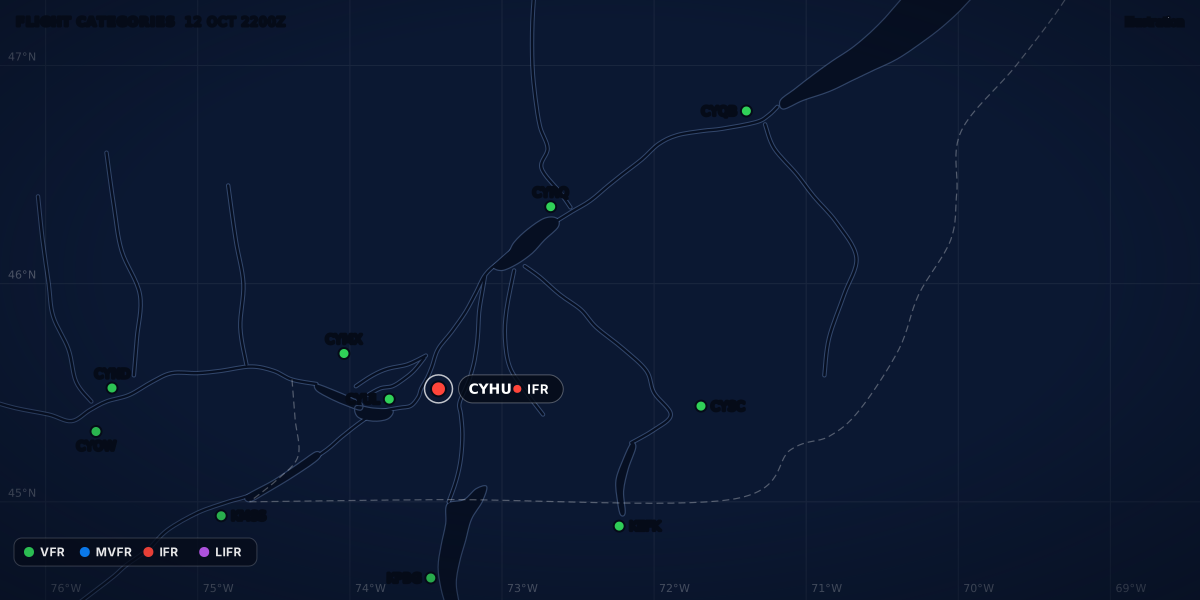
No METAR at your airport? Where to get the weather
No METAR or TAF at your field? The nearest station and how far to trust it, the GFA, AWOS, LWIS, weather cameras, and the rules in Canada and the US.
By Jp Valery14 min read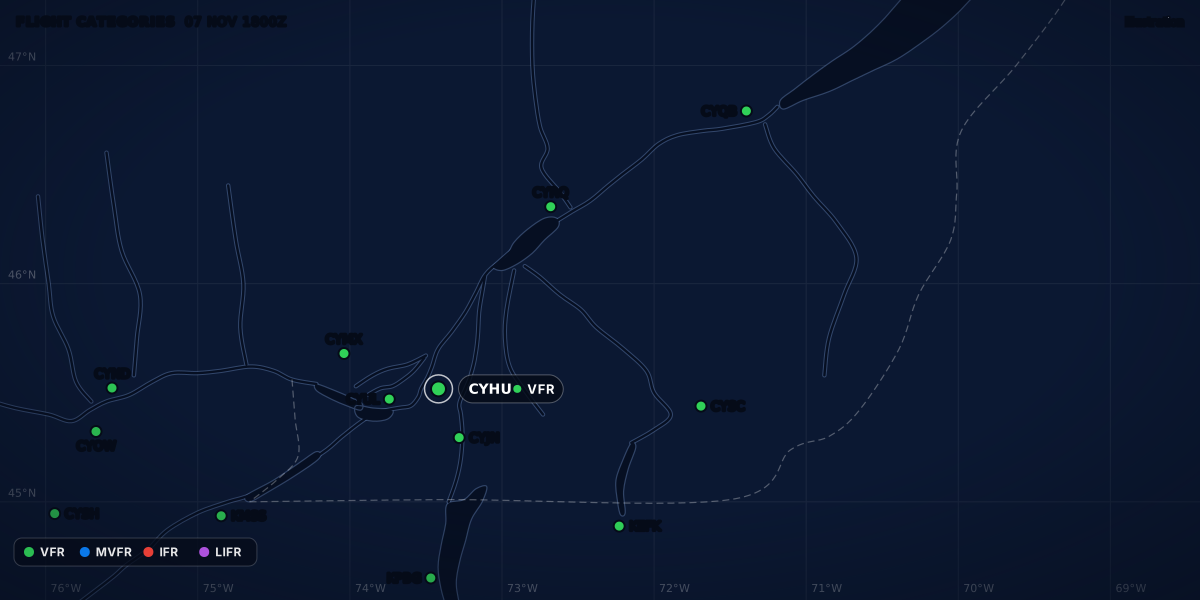
Headwinds and cruise altitude: pick a level from winds aloft
A 20-knot headwind adds about 20% to a Cessna 172's time and fuel. Compare the winds at each level, see why a round trip never pays back, and pick an altitude.
By Jp Valery9 min read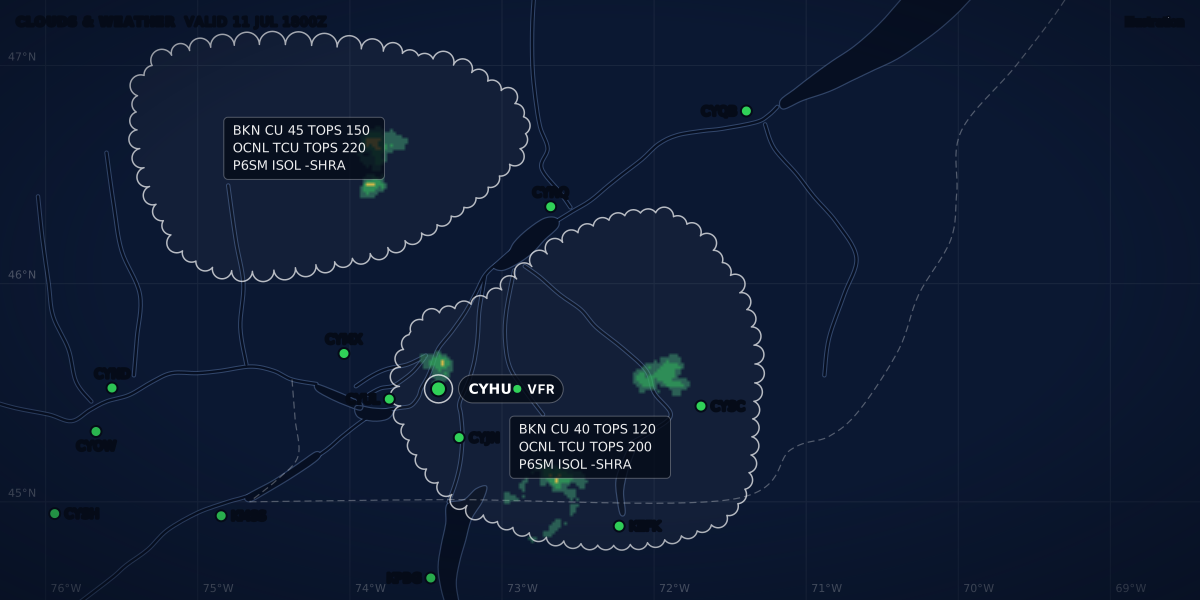
Turbulence in a small plane: plan smooth flights for passengers
What makes the air bumpy, the clues in a METAR and TAF, why summer afternoons are rougher, and how to brief your passengers on turbulence before engine start.
By Jp Valery11 min read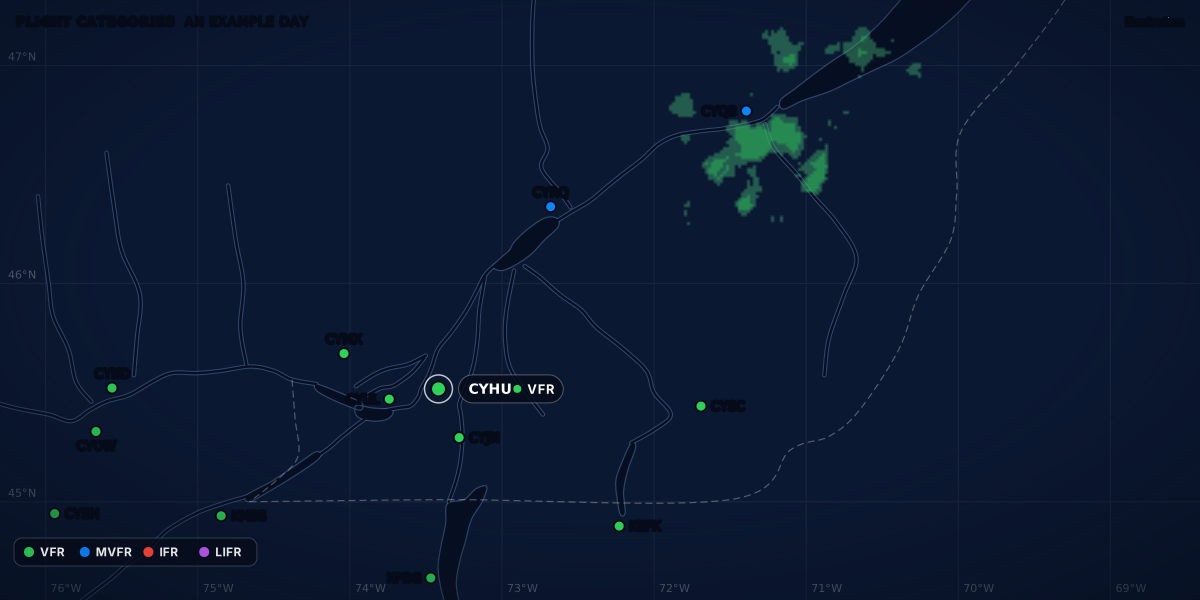
How many VFR days a year? 10 years of METARs at 12 airports
We counted 10 years of METARs at 12 airports in Canada and the US: daylight hours and days in the VFR category, month by month. The method, results and data.
By Jp Valery16 min read
Instrument rating
Getting the instrument rating in Canada, the US and Europe, staying current and choosing an alternate.
IFR rating: how to get an instrument rating in Canada, US, Europe
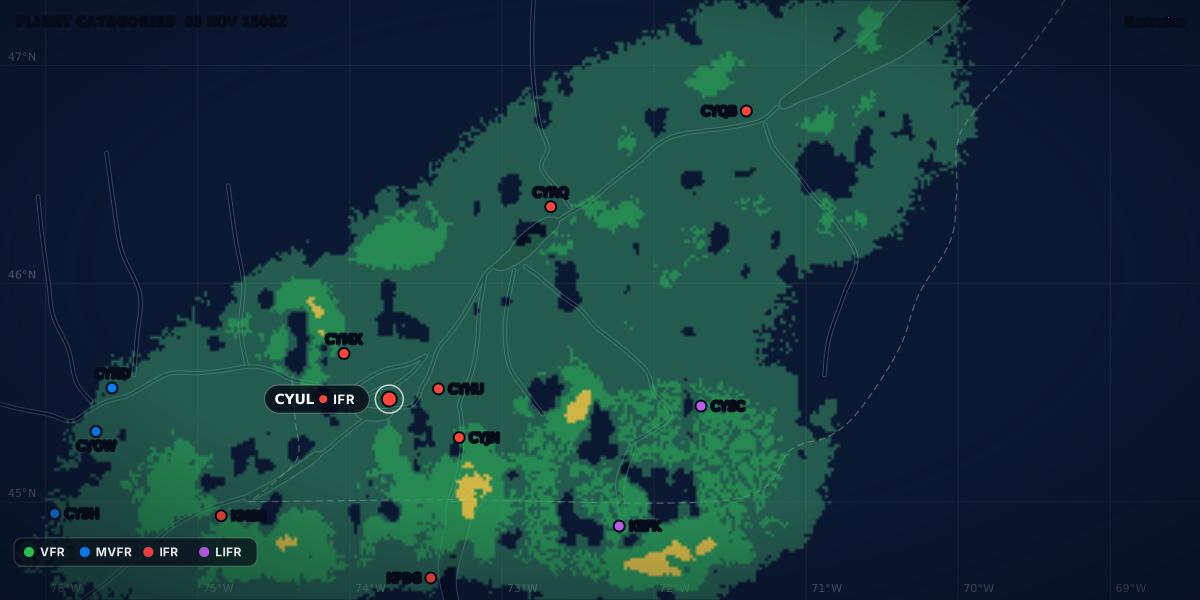
There is no IFR licence: there is an instrument rating. Paths, hours and exams in Canada, the US and Europe side by side, with costs and how to choose a route.
By Jp Valery13 min read
Instrument rating in Canada: groups, INRAT, hours and cost
Standard 421.46 in plain language: groups 1 to 4, the INRAT exam, 40 hours of instrument time, the flight test, recency since June 2026, and a 2026 budget.
By Jp Valery13 min read
Instrument rating requirements (FAA): hours, tests, Part 61 vs 141
14 CFR 61.65 clause by clause: 50 hours cross-country, 40 hours instrument time, the knowledge and practical tests, Part 61 vs Part 141, and dated cost data.
By Jp Valery13 min read
EASA instrument rating: CB-IR, modular IR, BIR and France
Three EASA routes to IFR: the modular IR, the competency-based IR (CB-IR) and the basic instrument rating (BIR). Hours, exams, English, revalidation, France.
By Jp Valery20 min read
IFR currency and the IPC in Canada and the US: 2026 rules
Canada changed IFR recency on June 17, 2026: six approaches in six months, no six hours. Canada vs US 61.57(c), the IPC, simulators and worked dates.
By Jp Valery16 min read
IFR alternate requirements: the 1-2-3 rule, Canada and EASA
When IFR needs an alternate and what weather it needs: the US 1-2-3 rule and 600-2/800-2, Canada's CAP GEN minima and TAF rules, and EASA Part-NCO.
By Jp Valery19 min read